
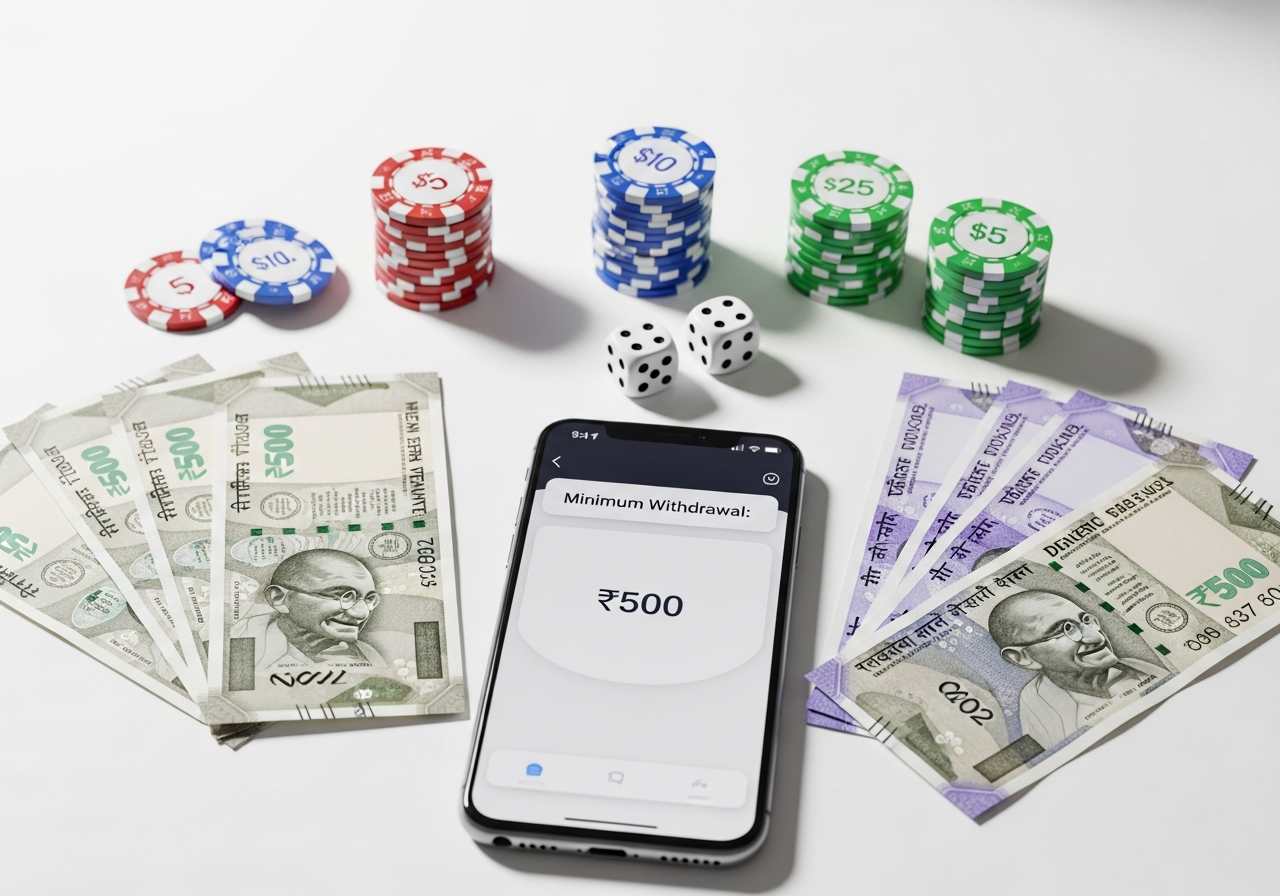
Finding an Indian casino that offers a minimum withdrawal limit of exactly ₹100 is a pursuit that often ends in disappointment. While many online casinos targeting Indian players advertise rock-bottom deposit minimums—often as low as ₹50–₹100—the withdrawal side of the equation tells a very different story. Most India-facing operators and their payment providers typically enforce minimum cashout thresholds starting at ₹500 to ₹1,000, depending on the withdrawal method and the casino’s own risk policies. This guide sets realistic expectations about what’s truly available, explains why these thresholds exist, and provides practical strategies to help you withdraw small balances or get as close to ₹100 minimums as the current landscape allows.
Understanding minimum withdrawal limits is essential if you plan to play at low-deposit casinos and avoid getting stuck with unwithdrawable funds. This article dives into the regulatory reasons behind withdrawal thresholds, compares real withdrawal policies across popular Indian casinos, and reveals how deposit and withdrawal minimums often operate under completely different rules.
How Minimum Withdrawal Limits Work at Indian Online Casinos
A minimum withdrawal limit is the smallest amount of cash or winnings you can request to be paid out from your casino account. Unlike deposit minimums, which casinos set low to encourage new players, withdrawal minimums serve operational and compliance purposes. Casinos establish these thresholds to manage transaction costs, comply with anti-money laundering (AML) regulations, and mitigate internal risk exposure. Processing a ₹50 withdrawal through UPI or a bank transfer costs almost as much in overhead and compliance review as processing ₹1,000, making micro-transactions economically unattractive for operators.
The withdrawal minimum also varies significantly by payment method. A casino might accept UPI withdrawals starting at ₹1,000 but allow Visa or Mastercard cashouts at ₹500. This differentiation reflects how each payment rail handles transaction costs and regulatory scrutiny. For Indian players, understanding these method-specific thresholds is critical because the “minimum withdrawal” advertised on a casino’s homepage often refers to the lowest tier across any supported method—not necessarily the method you prefer.
Regulatory and AML Reasons Behind Withdrawal Thresholds
Indian-facing casinos are keenly aware of anti-money laundering regulations and suspicious activity monitoring requirements, even if they operate in grey-market jurisdictions. Financial intelligence units (FIUs) globally require casinos and payment processors to flag and investigate transactions below certain thresholds when patterns suggest potential structuring or layering. By setting withdrawal minimums at ₹500 or higher, operators reduce the administrative burden of monitoring countless micro-transactions.
Additionally, payment providers like UPI networks, Paytm, and PhonePe impose their own compliance and settlement rules. A payment aggregator processing casino withdrawals must ensure each transaction meets AML criteria and can be reconciled with liquidity reserves. The higher the minimum withdrawal, the fewer individual transactions to process and review, which translates to lower operational risk and cost.
Difference Between Minimum Deposit and Minimum Withdrawal
This is where much confusion arises for Indian players. A casino might advertise “Minimum deposit ₹50” to attract new sign-ups, but that same casino’s cashout policy may require a minimum of ₹1,000. The gap is intentional: low deposits lower the barrier to entry and allow operators to gather new user accounts and engagement metrics. Withdrawals, however, are the casino’s expense, so they naturally come with higher thresholds to protect margins and operational efficiency.
When evaluating any casino’s deposit offer, always check the T&Cs or the cashout section of the help page to confirm what you can actually withdraw. Many players deposit ₹100, win ₹150, and then discover they cannot cash out below ₹1,000—a painful surprise that this article aims to help you avoid.
Typical Withdrawal Ranges for Indian Payment Methods
| Payment Method | Typical Minimum Withdrawal (INR) | Typical Maximum Withdrawal (INR) | Average Speed | Notes for Indian Players |
|---|---|---|---|---|
| UPI (BHIM, Google Pay, PhonePe) | ₹1,000–₹1,500 | ₹50,000–₹100,000 | 1–4 hours | Most common for Indian casinos; limits set by aggregators and bank partners. |
| Paytm Wallet | ₹500–₹1,000 | ₹50,000–₹100,000 | 2–6 hours | Lower minimum than UPI but less frequently supported; wallet verification required. |
| PhonePe | ₹1,000–₹1,500 | ₹50,000–₹100,000 | 2–4 hours | Growing support; minimum aligns with UPI standards. |
| Bank Transfer (NEFT/IMPS) | ₹500–₹1,000 | ₹500,000+ | 2–24 hours | Slower but higher limits; best for large cashouts. |
| Visa/Mastercard (card reversal) | ₹500–₹1,000 | ₹100,000–₹500,000 | 3–7 business days | Reversal to original card; no direct account funding. |
| E-wallets (other) | ₹1,000–₹2,000 | ₹50,000–₹200,000 | 4–24 hours | Less common; rates and minimums vary widely. |
| Cryptocurrency (BTC, USDT) | ₹2,000–₹5,000 | Unlimited | 10 minutes–2 hours | Fastest option but volatile exchange rates and limited adoption. |
As the table illustrates, a ₹100 minimum withdrawal is exceptionally rare. Most mainstream payment methods used by Indian casinos sit at ₹500–₹1,500. Even Paytm, which has lower thresholds than UPI in some cases, typically starts at ₹500. If a casino claims a ₹100 minimum withdrawal, verify it against the specific payment method you intend to use, because that figure may only apply to a less-popular or less-reliable withdrawal rail.
How Payment Providers Influence Casino Withdrawal Limits
Casinos do not always set withdrawal limits independently. Payment processors, aggregators, and the banks or fintech companies behind UPI, Paytm, and other rails dictate minimum transaction sizes to ensure compliance and profitability. When a casino integrates with a UPI payment gateway, that gateway’s risk policies and settlement agreements determine whether withdrawals below ₹1,000 are even technically possible.
For example, a casino may want to offer ₹200 UPI withdrawals to attract small-balance players, but the UPI aggregator it contracts with refuses to process transactions below ₹1,000. The casino is then forced to match that threshold or lose the payment method entirely. This interdependency means that ultra-low withdrawal minimums like ₹100 are often outside the casino’s direct control. Players looking for ₹100 minimum withdrawals should therefore focus on casinos that either have exclusive payment partnerships allowing lower limits or that explicitly advertise lower thresholds backed by historical customer reports.
Fast Payout Indian Casinos With the Lowest Withdrawal Limits
| Casino Brand | Jurisdiction / India Focus | Advertised Minimum Withdrawal (INR) | Main Cashout Methods for India | Average Payout Time |
|---|---|---|---|---|
| Melbet | Cyprus (Curacao license); strong India player base | ₹150–₹500 (varies by method) | UPI, Bank Transfer, e-wallets | 1–4 hours |
| Rajabets | Offshore (Curacao); India-optimized | ₹500–₹1,000 | UPI, Paytm, PhonePe, Bank Transfer | 2–6 hours |
| BigBaazi | Offshore; mobile-first for India | ₹1,000–₹1,500 | UPI, PhonePe, Bank Transfer | 1–3 hours |
| Casino Days | Malta license; India-friendly | ₹500–₹1,000 | UPI, Credit Card, Bank Transfer | 4–24 hours |
| 22Bet | Cyprus (Curacao); global reach | ₹500–₹1,000 | UPI, e-wallets, Bank Transfer | 2–8 hours |
| GreatWin | Offshore; India specialist | ₹1,000–₹1,500 | UPI, Paytm, Bank Transfer | 1–2 hours |
| LuckyDreams | Cyprus; India-oriented | ₹500–₹1,000 | UPI, Bank Transfer, e-wallets | 2–6 hours |
| Puntit | Offshore; India market focus | ₹1,000 | UPI, Bank Transfer, Paytm | 2–4 hours |
Melbet stands out in this list as the closest to offering ₹100-adjacent minimums, with some methods reported at ₹150–₹500 depending on the specific withdrawal rail and region. However, even Melbet’s lowest minimums are still significantly above ₹100. The table shows that among popular India-facing casinos, ₹500–₹1,000 is the industry norm, with a few operators pushing slightly lower for certain methods.
Examples of Flexible Low-Limit Policies (Melbet and Similar Sites)
Melbet has built a reputation among Indian players partly due to its relatively flexible withdrawal policies. While it does not officially advertise a ₹100 minimum, some withdrawal methods and promotional conditions allow cashouts as low as ₹150–₹200, particularly for players who have completed KYC and meet certain activity thresholds. This flexibility is unusual and likely stems from Melbet’s aggressive competition for the Indian market segment.
Other sites occasionally offer promotional “low withdrawal” events or VIP tiers where withdrawal minimums are reduced temporarily. These offers are rarely permanent, but they illustrate that casinos do have some margin to negotiate minimums if market conditions or player retention goals demand it. If finding the absolute lowest minimum is your priority, check Melbet’s current withdrawal page and any active bonus terms, and contact customer support to confirm the exact minimum for your preferred payment method.
Sites Emphasising Payout Speed Over Low Minimums
BigBaazi and GreatWin prioritise fast approval times and multiple banking options rather than ultra-low minimums. Both sites have built strong reputations for processing withdrawals within 1–3 hours, even though their minimum thresholds start at ₹1,000–₹1,500. For many Indian players, payout speed is more valuable than a marginally lower minimum, since a fast ₹1,000 cashout is preferable to waiting days for a ₹500 withdrawal on a slower platform.
Casino Days likewise emphasizes reliability and regulatory compliance (Malta license) over rock-bottom minimums. Their cashout minimums are standard at ₹500–₹1,000, but the site’s transparency and consistent payout performance make it a safer choice for players concerned about account security and withdrawal disputes. The trade-off between “lowest minimum” and “most reliable withdrawal” is important: sometimes paying a ₹500 minimum to a well-regulated site is better than chasing ₹150 minimums on less-established operators.
Indian Casinos With 100 INR Minimum Deposit vs. Withdrawal Limits
| Casino | Minimum Deposit (INR) | Approximate Minimum Withdrawal (INR) | Key Bonus Offer | Player Takeaway |
|---|---|---|---|---|
| Melbet | ₹50–₹100 | ₹150–₹500 | 100% up to ₹15,000 | Lowest deposit-to-withdrawal gap; withdrawal minimums still 3–5x deposit minimum. |
| Rajabets | ₹100 | ₹500–₹1,000 | 200% up to ₹20,000 | Large gap; plan to accumulate balance before withdrawing. |
| BigBaazi | ₹100 | ₹1,000–₹1,500 | 150% up to ₹25,000 | Significant deposit–withdrawal mismatch; bonus cashout limits may apply. |
| Casino Days | ₹50–₹100 | ₹500–₹1,000 | 100% up to ₹10,000 | Moderate gap; reliable for transparent T&Cs. |
| LuckyDreams | ₹100 | ₹500–₹1,000 | 250% up to ₹30,000 | Deposit–withdrawal spread requires planning; check bonus terms. |
| GreatWin | ₹100 | ₹1,000 | 200% up to ₹15,000 | Large withdrawal minimum; deposit bonus alone won’t reach cashout threshold. |
The table reveals a consistent pattern: casinos advertising ₹100 minimum deposits typically enforce withdrawal minimums 5–10 times higher. This gap is a deliberate business model. A ₹100 deposit attracts sign-ups and engagement, but the ₹1,000 withdrawal minimum ensures that many small-balance accounts never request a cashout, preserving the casino’s revenue.
Why 100 INR Deposit Casinos Rarely Offer 100 INR Withdrawals
The economics of online gambling favor low deposits and high withdrawal minimums. A casino that accepts ₹100 deposits but requires ₹1,000 to withdraw is betting that some players will lose their balance before accumulating enough to cash out, while others will keep small amounts in their accounts indefinitely (a phenomenon called “dormant balance arbitrage”). Additionally, processing a ₹100 withdrawal costs the casino nearly the same in transaction fees and compliance review as a ₹1,000 withdrawal, so there’s no financial incentive to lower the minimum below what payment providers will allow.
From an AML perspective, a ₹100 withdrawal might flag additional scrutiny if a player repeatedly requests micro-cashouts, so casinos prefer larger, less-frequent transactions. In summary: low deposits = marketing; high withdrawals = profitability and compliance. The gap is not a mistake; it’s intentional.
Practical Strategies to Withdraw Small Balances Close to 100 INR
- Top up your balance to meet the minimum. If your winnings are ₹750 and the minimum withdrawal is ₹1,000, deposit ₹250 from your own funds to reach the threshold. This works if you’re confident in your play and want to consolidate a cashout.
- Accumulate winnings over multiple gaming sessions. Instead of trying to withdraw after every small win, play several times and let your balance grow naturally. Most players reach ₹1,000+ within a few days of regular play.
- Complete KYC verification before attempting a withdrawal. Delays in account verification can trap small balances indefinitely. Submit your ID, proof of address, and payment method confirmation immediately upon sign-up, so that when you’re ready to withdraw, you don’t face a week-long verification hold.
- Check your casino’s bonus terms for withdrawal restrictions. Many welcome bonuses come with maximum cashout limits (e.g., “bonus winnings capped at 5x your deposit”). If you’ve claimed a bonus, your withdrawal amount may be capped below the balance you’ve accumulated, effectively creating a higher real minimum.
- Use the fastest withdrawal method available. If your casino supports both UPI and bank transfer, UPI often has lower minimums and faster processing. Choosing the right method can reduce your effective minimum withdrawal by ₹500 or more.
- Time your withdrawal around casino promotions or VIP status. Some casinos temporarily lower withdrawal minimums during promotional periods or for players who reach certain VIP levels. Monitor the promotions page and ask support if reduced minimums are available.
- Consolidate multiple small accounts into one. If you play at several casinos, avoid spreading your balance across platforms. Focus on one casino until you reach its withdrawal minimum, rather than maintaining balances below the threshold across many sites.
Avoiding Fees and Delays When Cashing Out Small Amounts
- Avoid repeated small withdrawals. Each withdrawal request triggers KYC re-checks, compliance reviews, and processing fees. A single ₹1,000 withdrawal is cheaper and faster than five ₹200 withdrawals.
- Verify your payment method is active and verified. If your UPI ID, bank account, or Paytm wallet is not confirmed in your casino account, your first withdrawal attempt will fail or be delayed while you verify. Update all payment details before submitting a cashout request.
- Account for processing time in your withdrawal plan. A “2–6 hour” payout time assumes all compliance checks pass instantly. If your account is flagged for any reason, even a fast-payout casino may hold your withdrawal for 24–48 hours. Never plan a withdrawal to arrive at an exact deadline.
- Check your withdrawal method for daily or monthly caps. Some UPI networks impose daily limits (e.g., ₹100,000 per day across all transactions). If you withdraw ₹50,000, your next withdrawal the same day may fail due to network limits, not the casino’s policy.
Using Bonuses Without Getting Trapped by Wagering Before Withdrawal
Casino bonuses often come with wagering requirements and maximum cashout clauses that effectively prevent withdrawal of small balances. For example, a “100% deposit match bonus up to ₹10,000” might include a 35x wagering requirement and a 5x maximum cashout limit. If you deposit ₹100 and receive a ₹100 bonus (₹200 total), you must wager ₹7,000 (35 × ₹200) before any withdrawal, and your winnings are capped at ₹500 (5x your ₹100 deposit), meaning your maximum cashout is ₹600—well below the ₹1,000 minimum.
Before claiming any bonus, read the withdrawal and wagering terms carefully. Ask yourself: “Will I realistically be able to meet the wagering requirement and stay within the cashout cap?” If not, skip the bonus and play with your own funds, which have no withdrawal restrictions. Many Indian players get trapped by generous-sounding bonuses that make actual withdrawals impossible at their preferred minimum.
Risk and Compliance Considerations for Indian Players
- KYC is not optional. Casinos require verified identity, address, and payment method information before processing any withdrawal. Plan for 1–3 business days to complete KYC, or your withdrawal will remain pending.
- Tax implications may apply. Online casino winnings in India are generally considered income and may be subject to income tax, depending on your state’s regulations and the amount. Withdrawals via bank transfer or UPI leave a clear transaction record, so ensure you’re comfortable with this traceability.
- Reliable operators are worth the higher minimum. A slow, disreputable casino with a ₹200 minimum is worse than a regulated, transparent operator with a ₹1,000 minimum. Payout reliability matters far more than a marginally lower threshold.
- Account misuse and fraud risks increase with unverified operators. Unregulated casinos in grey jurisdictions may freeze or confiscate accounts without warning, particularly for large withdrawals. Stick to sites with known payment processors and transparent T&Cs.
- Multiple withdrawals trigger greater scrutiny. Casinos and payment providers monitor patterns of activity. If you repeatedly withdraw small amounts just below AML thresholds, your account may be flagged for suspicious activity, and your withdrawals may be delayed or denied.
KYC, Taxation, and Bank Statement Visibility
When you withdraw casino winnings to a linked UPI ID or bank account, that transaction appears on your bank statement or payment app history. In India, the Income Tax Department can request information about large deposits, particularly if they appear unusual relative to your declared income. While casinos themselves do not typically issue tax forms (as they operate in grey-market jurisdictions), your bank or the payment processor may flag large or repeated deposits from gaming platforms.
To minimize friction, keep personal records of your casino accounts and withdrawals, understand your local tax obligations (which vary by state), and consult a tax professional if you’re withdrawing significant amounts regularly. Being transparent and documented reduces the risk of account freezes or disputes with your bank.
How to Evaluate a Casino’s Withdrawal Policy Before Signing Up
- Navigate to the casino’s Withdrawal or Banking page and note the minimum withdrawal amount listed. If only a range is shown (e.g., “₹500–₹1,500”), ask support which methods fall into each bracket.
- Cross-reference the minimum with your preferred payment method. UPI, Paytm, PhonePe, and bank transfers may have different minimums. Confirm that the method you plan to use supports your target withdrawal amount.
- Check the T&Cs for bonus-related withdrawal restrictions. Search for “maximum cashout,” “wagering requirement,” and “withdrawal limit” to understand how bonuses affect your ability to cash out small balances.
- Verify the payout speed. Look for average processing times and confirm whether they apply to all withdrawal methods or just specific ones. Fast approval doesn’t mean instant deposit into your account; it means the casino approves the request quickly.
- Review KYC requirements and documentation needed. Some casinos require a utility bill, passport scan, and payment method proof; others accept just an ID and selfie. Knowing the checklist upfront lets you prepare documentation and avoid delays.
- Search for recent user reviews on withdrawal speed and reliability. Check gambling forums, Reddit threads, and player review sites for feedback on whether the casino actually pays out on time and without disputes.
- Contact customer support with a specific question. Ask: “I want to withdraw ₹[your amount] via UPI. What is the minimum withdrawal, estimated processing time, and any fees?” A helpful, prompt response is a good sign; vague or slow replies are red flags.
Red Flags in Withdrawal Terms and Casino Reputation
- Withdrawal minimums far above deposit minimums without explanation. A ₹100 deposit minimum paired with a ₹5,000 withdrawal minimum (50x gap) is suspicious and suggests the casino is designed to trap small balances.
- Vague or missing withdrawal sections in the T&Cs. If a casino’s help page has no withdrawal information, or if terms are ambiguous, this indicates poor transparency and a higher risk of withdrawal disputes.
- Slow or unstated payout times. Any casino that doesn’t clearly state average payout times (e.g., “2–6 hours”) is not worth your time. Legitimate operators are proud of fast payouts.
- Repeated complaints about non-payment or account freezes. Search the casino’s name alongside “withdrawal problem,” “payout delay,” or “account frozen” on Reddit and gambling forums. More than a handful of recent complaints is a strong warning.
- No verifiable payment processor or banking partnerships. Reputable casinos openly name their payment providers and regulatory licenses. If a casino doesn’t mention its payment partner or license, it’s likely operating in a high-risk jurisdiction.
- Requirement to wager your withdrawal before cashing out. A few disreputable casinos claim you must “prove you can lose” before you can withdraw. This is a red flag for a scam or unregulated operation.
Comparing Multiple India-Facing Sites to Find Low-Limit Options
The best approach to finding a casino with genuinely low withdrawal minimums is to compare across multiple reliable India-focused lists and cross-check current withdrawal policies. Start with third-party comparison pages focused on fast payouts or low-deposit casinos in India, then visit each casino’s website and note its minimum withdrawal for each payment method.
Create a simple spreadsheet with columns for casino name, UPI minimum, Paytm minimum, bank transfer minimum, payout time, and KYC requirements. This lets you visualize which casinos truly offer the lowest minimums for your preferred method. Rank them by minimum withdrawal amount, then filter by payout time and user reviews to narrow down your final choice. Most players find that Melbet, Rajabets, and Casino Days cluster around ₹500–₹1,000, making them reasonable baseline options if the ₹100 minimum remains elusive.
Future Trends in Low-Limit INR Withdrawals
Minimum withdrawal limits may gradually decline over the next few years as payment technology and market competition evolve. Increased adoption of instant digital payment rails, improved AML automation, and pressure from new entrants competing for small-balance players could incentivize casinos to lower minimums below ₹500. However, it’s unlikely that true ₹100 minimum withdrawals will become the industry standard soon, because the operational and compliance costs of processing micro-transactions remain high.
Instead, expect a future where more casinos offer tiered withdrawal minimums: ₹300–₹500 for regular players and ₹100–₹200 for VIP or verified members. Cryptocurrency withdrawals may also lead the way, with some operators offering very low BTC minimums (e.g., 0.001 BTC ≈ ₹2,500–₹4,000) that appeal to tech-savvy players comfortable with exchange-rate volatility.
Impact of New Payment Rails and Regulation on Withdrawal Limits
India’s fintech ecosystem is evolving rapidly. The expansion of instant payment networks (NEFT/RTGS automation, faster UPI settlement), new e-wallet entrants, and even potential blockchain-based payment systems could increase competition among payment providers and lower their transaction minimums. If a payment gateway can process ₹100 withdrawals profitably, casinos will have more freedom to match that threshold.
Additionally, clearer regulation of online gambling in India (should it occur) could standardize withdrawal limits across operators, either raising minimums for compliance or lowering them if regulation is light-touch. Until then, the withdrawal minimum landscape will remain fragmented, with Melbet, Rajabets, and similar operators filling the niche of lower-minimum casinos while larger, more conservative sites stick to ₹1,000+.
For now, the pragmatic approach is to accept that ₹100 minimum withdrawals are a rarity in the current Indian casino market, plan your deposits and gameplay to accumulate balances above ₹500–₹1,000, and choose casinos that balance low minimums with payout reliability and transparent terms. By following the evaluation checklist and avoiding red flags outlined in this guide, you can find a trustworthy platform that offers withdrawals close to your target threshold and won’t leave you with trapped funds.