
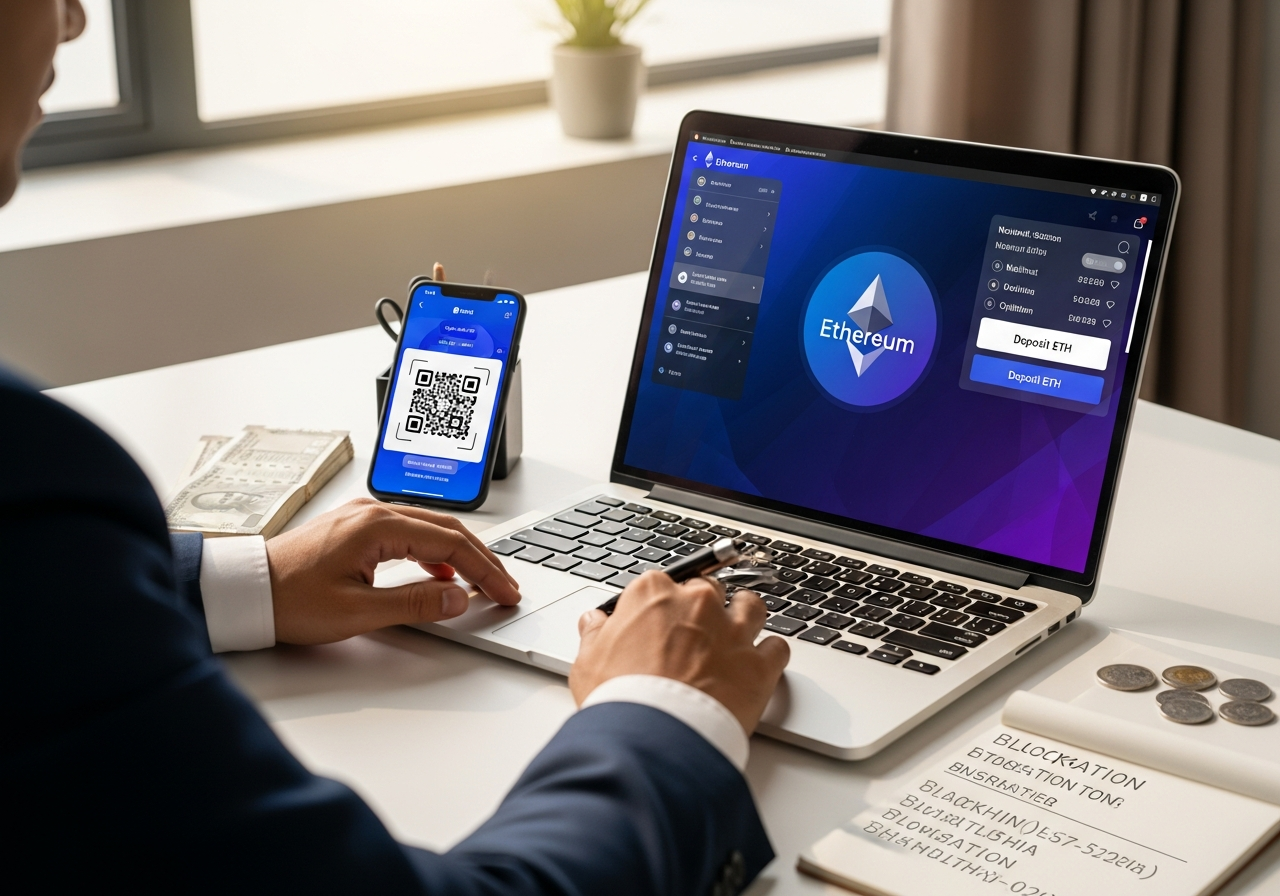
For Indian players seeking to use offshore crypto casinos, Ethereum has emerged as one of the most reliable and widely supported deposit and withdrawal methods. Unlike traditional payment rails that are often unavailable or restricted for casino transactions in India, Ethereum provides a direct, borderless alternative that bypasses regional banking limitations. This guide focuses exclusively on the payment mechanics of Ethereum casino banking—how to buy ETH in India, deposit it safely, withdraw winnings, and convert back to INR—rather than game selection or casino reviews.
The appeal of Ethereum for Indian casino players extends beyond novelty. Purchasing ETH through compliant Indian exchanges like WazirX or CoinDCX allows you to convert INR to crypto without intermediaries, while offshore casinos typically accept ETH deposits with minimal friction. Ethereum also offers flexibility: you can hold it as a long-term asset while using portions for gambling, and it supports both Mainnet and Layer 2 networks, each with different fee and speed profiles. Though gas fees can vary significantly depending on network congestion, Ethereum remains competitive compared to slower alternatives, and many casinos now support cheaper Layer 2 options like Arbitrum and Optimism.
Why Indian Players Use Ethereum For Casino Deposits And Withdrawals
Ethereum has become a cornerstone payment method at crypto casinos worldwide, and Indian players have particular reasons to rely on it. The global offshore casino ecosystem demands crypto for deposits and withdrawals, and Ethereum is among the most universally accepted options alongside Bitcoin and USDT. For Indian players, this means accessing casinos that would otherwise be unreachable through conventional banking channels.
ETH offers several operational advantages. Deposits typically arrive within minutes to an hour, depending on network conditions and confirmation requirements. Most casinos impose high or uncapped deposit limits when using Ethereum, making it suitable for both casual and high-volume players. Additionally, many operators now support multiple networks (Mainnet, Arbitrum, Optimism, Polygon), allowing Indians to choose lower-cost paths when available. The ability to hold Ethereum as a speculative asset while simultaneously using it for gambling appeals to players who view crypto as both a payment tool and an investment.
| Feature | Ethereum Advantage | Relevance For Indian Players |
|---|---|---|
| Global acceptance | ETH is accepted at nearly all crypto casinos | No casino-switching friction; widespread compatibility ensures Indian players maintain access across platforms |
| High deposit limits | Typically $10–unlimited per transaction | Removes caps that traditional methods impose; suitable for both microstaking and high-volume sessions |
| Multi-network support | Mainnet, Arbitrum, Optimism, Polygon available | Layer 2 options reduce gas fees significantly; Indians can choose cheaper routes based on casino support |
| Settlement speed | Deposits confirm in 1–15 minutes; withdrawals in minutes to hours | Faster liquidity than bank transfers; critical for players converting back to INR quickly |
| Dual-asset benefit | Hold ETH as investment + use for gambling | Aligns with Indian crypto investors who want exposure while accessing offshore casinos |
| No currency conversion at casino | Direct crypto-to-crypto; no INR-to-USD middleman | Simplifies accounting and avoids additional spreads that fiat conversions introduce |
Ethereum Vs Other Crypto Options For Indian Casino Banking
Comparing Ethereum to other common casino cryptocurrencies reveals important trade-offs for Indian players. While Bitcoin remains the oldest and most recognized, it typically has higher fees and slower confirmation times, making it less practical for frequent deposits and withdrawals. USDT (Tether on various networks) offers price stability, which simplifies bankroll management in INR terms, but it may not accrue investment value over time and some casinos charge slightly higher fees for USDT processing.
| Currency | Typical Fees | Speed | Volatility | Best Use Case For Indian Players |
|---|---|---|---|---|
| Ethereum | $5–$50 (Mainnet); <$1 (Arbitrum/Optimism) | 1–15 min deposits; 10–60 min withdrawals | High (±10% daily swings common) | Players who want multi-network flexibility and lower L2 costs; suitable for longer session holds |
| Bitcoin | $10–$100+ (Mainnet only) | 10–30 min deposits; 30–120 min withdrawals | High (similar to ETH) | Conservative players; no L2 option; better for very large single deposits where percentage fees matter less |
| USDT | $1–$5 (varies by network) | 1–10 min (especially on L2) | Minimal (<1% daily) | Risk-averse players; frequent deposits/withdrawals; simplifies INR budgeting; reduces volatility concern |
| Polygon MATIC | <$0.01–$0.50 | <5 min | High | Micro-stakes; testing workflows; few casinos accept directly for gambling, mainly used for bridging |
| Dogecoin | $0.50–$5 | 15–30 min | High | Niche support; mainly for fun/novelty; not recommended for serious gaming |
Regulatory And Practical Considerations For Indians Using ETH
Buying Ethereum in India requires navigating the country’s regulated crypto exchange ecosystem. Platforms like WazirX, CoinDCX, and Zebpay operate under India’s anti-money laundering (AML) frameworks and mandate Know-Your-Customer (KYC) procedures. This means you must verify your identity with a PAN, Aadhaar, and bank details before purchasing ETH. The process typically takes a few hours to complete, after which you can deposit INR via bank transfer and convert to Ethereum immediately.
Once you own ETH and transfer it to an offshore casino, the casino’s KYC requirements may differ significantly from Indian exchanges. Many crypto casinos enforce KYC only at withdrawal time, particularly if you request large sums or trigger anti-fraud flags. Some casinos claim “no KYC” for deposits but still require identity verification before releasing funds. It is important to review each casino’s terms before depositing; attempting to withdraw without satisfying their KYC requirements can freeze your balance.
Beyond regulatory compliance, Indian players should maintain clear records of all ETH transactions. Document your INR purchase price, deposit dates, withdrawal dates, and the INR value at the time of conversion back to fiat. While India’s Income Tax Act does not yet provide comprehensive crypto gambling taxation guidance, the Goods and Services Tax (GST) Council has indicated that future regulations may apply. Keeping detailed transaction records—including blockchain transaction IDs (TXIDs)—protects you legally and simplifies any future compliance obligations. Do not rely on casinos’ statements alone; verify deposits and withdrawals independently using blockchain explorers.
How Indian Players Can Buy Ethereum Safely Before Depositing
Before depositing ETH at a casino, you must acquire Ethereum through a trusted Indian exchange and transfer it to a personal wallet under your control. Here is a step-by-step process tailored to Indian players:
- Choose a regulated Indian exchange — Select a platform like WazirX, CoinDCX, or Zebpay. These platforms operate transparently, publish cold-storage reserves, and comply with RBI and SEBI guidance on crypto asset handling.
- Complete KYC verification — Upload your PAN, Aadhaar (or passport), and address proof. Verification typically takes 1–24 hours. Enable two-factor authentication (2FA) on your exchange account immediately after verification.
- Deposit INR to your exchange account — Link a bank account and transfer the rupees you plan to convert to ETH. Most exchanges accept deposits via NEFT, RTGS, or UPI; transfers usually arrive within 1–2 hours.
- Convert INR to Ethereum — Once rupees are in your exchange wallet, navigate to the ETH trading pair (INR/ETH) and place a buy order at the market rate or set a limit order if you prefer a specific price.
- Withdraw ETH to your personal wallet — Do not hold ETH on the exchange. Copy your wallet’s receiving address (from MetaMask, Trust Wallet, or a hardware wallet) and initiate a withdrawal. Confirm the network (typically ERC-20 for Mainnet). Most exchanges charge 0.005–0.01 ETH withdrawal fees.
- Wait for confirmation and verify receipt — The transfer usually takes 10–30 minutes. Check your personal wallet and the blockchain explorer (Etherscan.io) using the withdrawal TXID to confirm the transaction settled.
- Transfer a test amount to the casino first — Before moving your full intended deposit, send a small amount (0.01 ETH or less) to the casino’s deposit address to ensure the address and network are correct.
Choosing Wallets And Exchanges Optimized For Indian ETH Users
Selecting the right wallet depends on your comfort level with crypto and intended use frequency. MetaMask is the most widely used browser extension and mobile wallet globally; it supports multiple networks, integrates directly with casinos, and offers a clean interface for viewing balances and transaction history. For Indian users, MetaMask is ideal because it enables quick switching between Mainnet and Layer 2 networks—a critical feature when casinos support cheaper alternatives.
Trust Wallet is a mobile-first alternative that appeals to players who prefer smartphone access and minimal setup. It supports similar network switching and is compatible with most casinos’ deposit flows.
For maximum security, hardware wallets like Ledger Nano S/X or Trezor store private keys offline and require physical confirmation for transactions, though they add complexity for frequent deposits and withdrawals. Indian players who gamble regularly may find hardware wallets less convenient than hot wallets but should consider them if holding large ETH balances.
Regarding Indian exchanges, WazirX offers a user-friendly interface and lower withdrawal fees (often 0.004 ETH) compared to global platforms; it also provides real-time INR pricing and integrates seamlessly with Indian banking rails. CoinDCX emphasizes transparency and regulatory compliance, with similarly low fees. Both platforms are reputable, support instant INR deposits via UPI, and process withdrawals within 1–2 hours. Choosing between them often comes down to personal preference and current fee structures, which fluctuate monthly.
Understanding Ethereum Casino Deposits: Networks, Confirmations And Limits
When you deposit Ethereum at a casino, you are executing an on-chain transaction that must be confirmed by the Ethereum network. Understanding this process helps you choose the most cost-effective and speedy route based on the casino’s supported networks.
| Deposit Factor | Typical Range/Behaviour | Impact On Indian Players | How To Optimize |
|---|---|---|---|
| Mainnet gas fees | $5–$50 USD per transaction | High fees reduce effective deposit value; better for large amounts | Use during off-peak hours (late night or early morning India time) |
| Arbitrum gas fees | <$0.10–$1.00 USD per transaction | Minimal cost; allows smaller deposits without fee erosion | Preferred for frequent or micro-stake deposits |
| Optimism gas fees | $0.20–$2.00 USD per transaction | Low cost; good middle ground between cost and speed | Check casino support; if available, prioritize over Mainnet for standard deposits |
| Polygon MATIC gas fees | <$0.01–$0.10 USD | Extremely cheap; some casinos support it, others don’t | Few casinos accept MATIC directly; use only if explicitly supported |
| Confirmation time | 1–5 minutes (Mainnet); <1 min (L2) | L2 deposits appear instantly; Mainnet requires patience | Use L2 if time-sensitive (e.g., bonus deadlines) |
| Minimum deposit | $10–$100 (varies by casino/network) | Lower minimums on L2 networks; Mainnet minimums often higher due to fee recovery | Check casino’s deposit page for network-specific minimums before committing |
| Maximum deposit | Unlimited to $50,000+ (varies by casino) | Most casinos impose no cap; useful for high-volume players | Verify before planning large deposits; some casinos apply soft caps at certain membership tiers |
Ethereum Mainnet Vs Layer 2 For Casino Deposits
Ethereum Mainnet (Layer 1) is the original blockchain and remains the most secure and widely recognized. However, network congestion often drives gas fees to $10–$50 per transaction. For Indian players converting small to medium sums from INR, these fees can erode 5–20% of the deposit amount.
Layer 2 solutions like Arbitrum, Optimism, and Polygon Bundle transactions in batches and post them to Mainnet periodically, dramatically reducing per-transaction costs. Arbitrum and Optimism typically cost under $1 per deposit and settle in seconds. Many newer casinos now support Layer 2, recognizing that players prefer cheaper, faster deposits. The trade-off is that Layer 2 has a slightly longer withdrawal path (your ETH must be “bridged” back to Mainnet, a process that can take 1–7 days on Optimism but is near-instant on Arbitrum), though casinos usually handle this transparently.
For Indian players, the strategy is simple: if the casino supports Arbitrum or Optimism, deposit via that network to save 95%+ on gas fees. Only use Mainnet if the casino explicitly does not support Layer 2, or if you are depositing a very large amount where the percentage fee difference becomes negligible. Always confirm the network selection before approving the transaction in your wallet; sending Mainnet ETH to a Layer 2 address (or vice versa) will result in lost funds.
Deposit Limits And Bonusing For Indian ETH Casino Players
Deposit limits vary by casino but generally reflect the operator’s risk appetite and liquidity position. Most casinos that accept ETH advertise uncapped or very high limits (e.g., $50,000+ per transaction) to attract high-volume players. Some casinos set lower limits (e.g., $100–$500 minimum) to discourage micro-stakes or reduce payment processing overhead.
Understanding these limits is important for bonus planning. Many casinos offer welcome bonuses tied to the first deposit amount. For example, a casino might advertise “100% match up to 1 ETH,” meaning if you deposit 1 ETH, you receive 1 ETH in bonus funds—but only if your deposit meets or exceeds a stated minimum (often $50–$100). For Indian players planning a first deposit, reviewing the casino’s bonus terms and confirming that your intended ETH amount qualifies is essential. If the deposit minimum is $100 and you plan to deposit 0.5 ETH (worth ~$800), you will easily qualify. Conversely, if you plan 0.02 ETH (~$160), ensure the casino’s minimum does not exceed that amount.
Some casinos also implement maximum limits as anti-fraud measures or to spread large deposits across multiple transactions for compliance reasons. If your intended deposit exceeds the stated maximum, contact the casino’s support team to arrange a multi-tranche deposit or confirm whether a higher limit can be granted for your account.
Step-By-Step: Making Your First Ethereum Casino Deposit From India
Depositing Ethereum at a crypto casino involves several discrete steps. Here is a detailed walkthrough tailored to Indian players:
- Log in to your casino account — Access the casino’s website or app and navigate to the cashier or banking section. Verify that the URL is official (check your browser’s address bar and any security certificates).
- Select Ethereum as your deposit method — In the cashier, select ETH from the list of cryptocurrencies. Do not confuse it with other tokens; confirm the icon and label clearly state “Ethereum” or “ETH.”
- Choose the correct network — If the casino supports multiple networks, select the one offering the lowest fees (Arbitrum or Optimism if available, otherwise Mainnet). Confirm your choice; sending ETH to the wrong network results in irreversible loss.
- Review the deposit address and copy it carefully — The casino will display a unique deposit address (a string of 42 characters starting with “0x”). Copy this address exactly, or use the QR code if your wallet supports scanning. Do not manually type the address.
- Open your personal wallet and initiate a send transaction — In MetaMask, Trust Wallet, or your chosen wallet, select “Send,” paste the casino’s address, and enter the amount of ETH you wish to deposit (e.g., 0.5 ETH). Start with a test amount of 0.01 ETH or less.
- Confirm the network matches the casino’s requirement — Before approving the transaction, verify that your wallet is set to the correct network (Arbitrum, Optimism, or Mainnet). This is often shown in the top right of MetaMask or a dropdown in other wallets.
- Review the gas fee estimate and approve the transaction — Your wallet will display an estimated gas fee. On Mainnet, this might be $10–$50; on Layer 2, <$1. If the fee seems unusually high, cancel and try again during lower-demand times (e.g., early morning India Standard Time).
- Save the transaction ID (TXID) for your records — Once approved, your wallet displays a transaction hash (TXID)—a unique identifier. Copy and save this for record-keeping and to verify the deposit on the blockchain.
- Wait for confirmation and check your casino account — Depending on the network, the deposit should appear in your casino account within 1–15 minutes. Check the casino’s transaction history or recent activity to confirm the deposit has posted.
- Verify on Etherscan (optional but recommended) — Visit Etherscan.io (for Mainnet) or the appropriate Layer 2 explorer (Arbiscan for Arbitrum, Optimism’s explorer for OP) and search for your TXID to verify the transaction is confirmed on the blockchain independently.
Common Deposit Mistakes Indian Players Make With ETH
Even experienced crypto users sometimes make preventable errors during deposits. Here are common pitfalls and how to avoid them:
- Sending to the wrong network — If the casino is on Arbitrum but your wallet is set to Mainnet, the ETH will be sent to the correct address but on the wrong blockchain, resulting in permanent loss. Always double-check the network selector in your wallet before confirming the transaction.
- Not confirming the minimum deposit amount — Casinos often state minimum deposits (e.g., $50 or 0.01 ETH). Sending less than the minimum may result in the casino rejecting or freezing the deposit. Verify the minimum on the casino’s deposit page before initiating the transfer.
- Ignoring test transactions — Sending your full intended deposit without first testing a tiny amount (0.001–0.01 ETH) risks losing significant funds if the address is incorrect or the network is wrong. Always test with a small sum first.
- Withdrawing winnings before the deposit confirms — Some players request a withdrawal after winning, only to find their original deposit never confirmed. Wait for deposit confirmation emails or transaction notifications before assuming funds are available.
- Typos in the receiving address — If you manually type the casino’s address and make a single character error, the ETH will be sent to an unknown address. Always copy and paste the address directly from the casino’s page, or use QR code scanning if available.
- Not saving the TXID or transaction proof — Without the TXID, you cannot verify the transaction on a blockchain explorer if disputes arise. Save the TXID and a screenshot of the confirmation immediately after the transaction is broadcast.
Ethereum Casino Withdrawals For Indian Players: Process, Timing And Fees
Withdrawing winnings from a crypto casino involves several stages, each with different timelines and potential friction points. Understanding the full flow helps you plan your cashout strategy and manage expectations around liquidity.
The withdrawal process begins when you request a payout in the casino’s cashier. The casino’s backend then verifies your account (checking for violations, wagering requirements, or bonus conditions). If your account passes compliance, the operator approves the withdrawal and broadcasts an ETH transaction to the blockchain. This transaction must be confirmed by miners/validators—typically 12 confirmations on Mainnet (1–5 minutes) or near-instant on Layer 2. Once confirmed, the ETH arrives in your personal wallet. The entire flow typically takes 10 minutes to 2 hours for Mainnet, and 1–10 minutes for Layer 2.
| Withdrawal Step | Casino Action | Blockchain Action | Typical Timeframe |
|---|---|---|---|
| Player initiates withdrawal | Casino receives request; checks balance and compliance | N/A | Instant (same minute) |
| Casino approval | Operator validates account; checks for KYC flags or disputes | N/A | 1–60 minutes (often instant for low amounts) |
| Transaction broadcast | Casino signs and sends the withdrawal transaction | Transaction enters the mempool (pending) | 1–5 minutes after casino approval |
| Network confirmation | N/A | Miners/validators confirm; 12+ blocks added | 1–15 min (Mainnet); <1 min (L2) |
| Delivery to player wallet | N/A | ETH appears in player’s address | 30 sec–5 min after confirmation completes |
| Total duration | — | — | 10 min–2 hours (Mainnet); 1–10 min (L2) |
Withdrawal Limits, KYC Triggers And No-Cap ETH Casinos
Withdrawal limits and KYC triggers vary significantly across casinos. Some operators impose no caps and allow verified players to withdraw any amount instantly; others enforce daily or monthly limits (e.g., $10,000/day) or tiered limits based on account age and verification status.
KYC (Know-Your-Customer) requirements often trigger at specific withdrawal thresholds. For instance, a casino might allow the first $1,000 to be withdrawn without KYC, but require identity verification (document upload, selfie verification, address proof) before approving larger amounts. For Indian players, this means you may need to provide a PAN, Aadhaar copy, or passport at the point of withdrawal. Some casinos conduct KYC upfront; others verify only at cashout time.
“No-KYC” casinos promise to avoid identity verification entirely, but this claim is increasingly difficult to verify legally. Most operators claiming “no KYC” actually mean “no KYC for deposits” but still require identity checks at withdrawal. Reading the fine print and contacting support before depositing is wise. If you are uncomfortable sharing identity documents, look for casinos that explicitly allow “anonymous withdrawals” up to stated limits (though increasingly, global anti-money laundering regulations are making this rarer).
When selecting a casino, prioritize platforms with clear, published withdrawal policies. Some casinos advertise “instant withdrawals” or “automated payouts,” meaning the withdrawal process is entirely automated and requires no manual review—offering better speed and predictability for Indian players who want quick INR liquidity.
Estimating Fees And Net Payout In INR For Indian ETH Cashouts
Calculating your true payout in INR requires accounting for multiple fees and FX spreads. Here is a practical framework:
Gross ETH withdrawal amount: The amount approved by the casino (e.g., 0.5 ETH).
Blockchain/network fee: On Mainnet, expect $5–$30 in gas fees. On Layer 2, <$0.50. This is paid in ETH and deducted by the casino automatically. For example, if you withdraw 0.5 ETH on Mainnet and gas is $20 (≈0.012 ETH), the net received is 0.488 ETH.
Exchange fee to convert back to INR: When you move the ETH from your wallet to an Indian exchange (WazirX, CoinDCX, etc.) and sell it, you incur a 0.5–2% trading fee (varies by platform and your volume tier). On 0.488 ETH at a 1% fee, you lose ≈0.005 ETH.
Spread/slippage: The ETH/INR rate at which you sell on the exchange might differ from the spot price due to order book depth and your order size. Large withdrawals can experience slippage of 0.5–2%.
Net INR amount: Convert the final ETH amount to INR using the current exchange rate. For example, 0.483 ETH × ₹180,000/ETH (hypothetical rate) = ₹86,940.
Practical estimation: Before withdrawing a large sum, visit your exchange, note the current ETH/INR bid price, and calculate backwards. If you intend to withdraw 1 ETH from a casino and expect to receive ≈0.98 ETH after network fees, sell 0.98 ETH at the current bid on your exchange and apply a 1% trading fee. The result is your approximate net INR. This quick mental math prevents surprises.
Comparing Ethereum Casino Banking Policies At Indian-Friendly Sites
Different crypto casinos employ varying ETH deposit and withdrawal policies. The table below summarizes common patterns found in casinos that actively serve Indian players:
| Casino Type/Example | ETH Deposit Min | ETH Withdrawal Policy | KYC Rules | Ideal Player Profile In India |
|---|---|---|---|---|
| Established no-KYC (deposit) | $10–$50 | Instant automated; no KYC unless withdrawal exceeds $5k | KYC required at $5k+ withdrawal | Casual/micro-stake players; short session plays; those averse to identity sharing |
| KYC-upfront platform | $20–$100 | Instant automated after KYC approval; 24/7 | KYC required at account creation | Serious players; comfortable with verification; consistent long-term users |
| High-limit operator | $50–$500+ | Manual review; 1–6 hour approval; then instant on-chain | KYC required; enhanced KYC for >$10k withdrawal | Professional/high-volume players; long hold times acceptable; large single deposits |
| Layer 2-focused | $5–$30 | Instant automated (L2); 1–3 day bridge if Mainnet requested | KYC for withdrawals >$1k | Cost-conscious players; frequent deposits/withdrawals; prefer low gas expense |
| Hybrid (multi-tier limits) | $10–$200 | $0–$500 instant; $500–$5k manual (1–2 hr); >$5k enhanced review (24 hr) | Tiered: none for <$500; light KYC for $500–$5k; full KYC for $5k+ | Mid-volume players; flexible schedule; willing to complete documentation gradually |
Instant-Withdrawal vs Manual-Approval Ethereum Casinos
The distinction between automated and manual withdrawals significantly impacts player experience, especially for Indian users seeking rapid INR conversions.
Instant-withdrawal casinos process payouts automatically through smart contracts or pre-signed transactions. Once you request a withdrawal, the ETH is sent to your wallet within minutes, with no human review. These casinos typically impose modest per-transaction limits (e.g., max $2,000 per withdrawal) and require account verification before enabling automated payouts. For Indian players, instant withdrawals are ideal if you want quick access to INR liquidity and are comfortable completing upfront KYC.
Manual-approval casinos route withdrawal requests through a compliance team that reviews the transaction, checks for anti-fraud signals (unusual geography, rapid consecutive withdrawals, etc.), and approves or rejects within 1–24 hours. After approval, the on-chain transaction broadcasts, and ETH arrives in your wallet within minutes. These casinos often have higher withdrawal caps but slower initial approval times. They may be preferable if you are making large withdrawals or expect to be questioned on the source of funds, as a human review provides an opportunity to clarify intent. However, they are less convenient for players wanting same-day INR access.
Choosing between the two depends on your withdrawal frequency and amount. Casual players making small weekly withdrawals should prefer instant-withdrawal casinos; high-volume players making monthly large withdrawals can tolerate manual review in exchange for higher limits.
Security Best Practices For Indian Players Using Ethereum At Casinos
Protecting your funds and identity while using Ethereum casinos requires attention to both wallet security and casino account hygiene.
- Use a dedicated gambling wallet — Create a separate MetaMask or hardware wallet specifically for casino deposits. Do not mix this wallet with your long-term crypto investments or other hot wallets. This isolation limits exposure if one wallet is compromised.
- Enable two-factor authentication (2FA) everywhere — Activate 2FA on your Indian exchange, your email, and your casino account (if offered). Use authenticator apps like Google Authenticator or Authy rather than SMS, which can be intercepted via SIM swaps.
- Verify TXIDs on block explorers before concluding a transaction — After depositing or withdrawing, search for your TXID on Etherscan, Arbiscan, or the relevant Layer 2 explorer. Confirm the transaction status (pending, confirmed, failed) independently; do not rely solely on the casino’s interface.
- Never share your seed phrase or private keys — If anyone (including casino support) asks for your seed phrase, that is a social engineering attack. Seed phrases grant complete control of your wallet; they should be written down offline and stored securely.
- Avoid public Wi-Fi for casino transactions — Use a private, password-protected network or mobile hotspot when logging into casinos or exchanges. Public Wi-Fi can be monitored by attackers, allowing them to intercept login credentials or transaction data.
- Double-check the casino URL before logging in — Phishing sites mimic legitimate casinos but steal login credentials. Always bookmark the official casino URL, or search for it on trusted aggregate sites, rather than clicking links from emails or ads.
- Review and whitelist casino deposit addresses — If your casino or wallet supports address whitelisting, enable it. Whitelisting means only pre-approved addresses can receive withdrawals from your wallet, preventing unauthorized cashouts even if an attacker gains temporary access.
Protecting Your Wallet: From Seed Phrases To Transaction Hygiene
Your Ethereum wallet is the gateway to your casino funds. A compromised wallet can result in immediate, irreversible loss of all ETH held in it.
Seed phrase security is paramount. When you create a MetaMask or hardware wallet, you receive a 12- or 24-word recovery seed phrase. This phrase can regenerate your entire wallet on any device; anyone with it has full control. Write the seed phrase on paper, store it in a secure physical location (home safe, safety deposit box), and never take digital photos or screenshots. If you use a hardware wallet like Ledger, keep the seed phrase offline and never plug the device into a computer running unknown software.
Transaction hygiene means verifying every transaction before approving it. In MetaMask, before approving a transaction, review the “From” address (your wallet), the “To” address (the casino’s deposit address), the amount, and the gas fee. If any detail looks incorrect, cancel and re-initiate the transaction. Additionally, check whether the transaction specifies the correct network. MetaMask displays the network in the top-right corner; if you see “Ethereum Mainnet” but the casino deposit address is for Arbitrum, cancel immediately.
Session limits add another layer of security. Some wallet extensions allow you to set daily or per-transaction ETH spending limits. Enable these if available; if an attacker gains access, they will be restricted to small transactions, giving you time to notice and remediate the breach.
Partial cold storage is a strategy for high-volume players. Keep most of your ETH in a hardware wallet (cold storage) and transfer only your session bankroll to MetaMask (hot wallet). If the hot wallet is compromised, losses are capped to the session amount.
Casino-Side Security: Account Protection And Withdrawal Controls
Casinos increasingly offer account protection features that complement wallet security.
Withdrawal address locks let you register one personal wallet address as the sole recipient for ETH withdrawals. Once locked, casino staff cannot send withdrawals to unregistered addresses, even if an attacker gains access to your account. Enable this immediately after creating your casino account.
Two-factor authentication for withdrawals requires you to enter a code (from an authenticator app) before any withdrawal is approved. This prevents attackers from cashing out even if they have your password.
Device and IP verification allow the casino to flag login attempts from unusual devices or geographical locations. If an attacker in another country tries to log in to your account, the casino may block the attempt or require additional verification.
Withdrawal limits and cooldown periods let you set maximum daily or weekly withdrawal amounts and enforce a waiting period (e.g., 24 hours) before payouts are processed. These settings slow down attackers and give you time to notice unauthorized withdrawal requests.
Account activity notifications via email or SMS alert you to every login, deposit, and withdrawal, allowing you to spot unauthorized access immediately.
Review your casino account settings immediately after registration and enable all available security features, even if they add a few minutes to the withdrawal process. The added friction is a worthwhile trade-off for peace of mind.
Cost, Speed And Reliability: Making ETH Banking Work With INR
The interplay between Ethereum network dynamics, casino processing, and Indian exchange liquidity determines your real-world banking experience. Understanding these factors helps you optimize your casino cryptocurrency strategy.
| Factor | Typical Ethereum Behaviour | Effect On INR-Based Bankroll | Practical Tip |
|---|---|---|---|
| Mainnet gas fee volatility | $5–$50+ depending on network congestion; peaks during US trading hours | High fees can erode 10–50% of small deposits; less impactful for large amounts | Deposit during low-congestion windows (late night IST); use Layer 2 alternatives |
| Layer 2 fee consistency | Arbitrum/Optimism: <$1 per transaction, stable throughout the day | Minimal fee impact; deposit size remains nearly intact | Default to Layer 2 if casino supports it; savings compound across multiple deposits |
| Deposit confirmation time | Mainnet: 1–15 minutes; Layer 2: <1 minute | Faster confirms reduce anxiety; Layer 2 allows immediate gambling | L2 is critical if you want to deposit and play same-session without waiting |
| Casino processing time | Instant to 1 hour (depends on operator) | Delays between deposit broadcast and account credit create window of uncertainty | Contact support if deposit not reflected within 1 hour; most casinos respond within 15 min |
| Withdrawal approval time | Instant (auto) to 24 hours (manual) | Slower approvals delay INR conversion; longer exposure to ETH price swings | Choose auto-approval casinos for quicker fiat conversion; accept manual review for large amounts |
| Indian exchange liquidity (bid-ask spread) | 0.5–2% spread depending on ETH/INR pair depth and your trade size | Large sales may execute at unfavorable prices; smaller INR receipt | Sell during peak trading hours (India evening when US market is open); place limit orders rather than market orders |
| INR bank deposit time (exchange to your bank) | 1–4 hours for INR bank transfer via NEFT/RTGS | Total liquidity lag from casino withdrawal to INR in your account: 1–6 hours | Plan cashouts when Indian banking hours are in effect; withdraw on weekdays rather than Friday evenings |
Managing Volatility Risk When Holding ETH For Gambling
Ethereum’s price volatility—daily swings of 5–15% are common—introduces a complication for Indian players converting between INR and ETH.
If you buy 1 ETH at ₹180,000 and use it to gamble, your “bankroll” in INR terms fluctuates with the ETH/INR exchange rate. If ETH rises to ₹200,000, your bankroll nominally increases; if it falls to ₹160,000, it decreases—even if you have not placed any bets. For players focused on INR budgets (e.g., “I am gambling with ₹100,000”), this volatility adds confusion and risk.
Strategies to reduce volatility exposure:
Short hold periods: Convert INR to ETH immediately before depositing to the casino and convert back to INR immediately after withdrawing. Minimize the time your funds are exposed to ETH price swings. This is suitable for session players.
Partial stablecoin conversion: If the casino supports USDT or USDC, convert half your intended bankroll to a stablecoin (pegged 1:1 to USD) and keep half in ETH. Stablecoins eliminate volatility, though they may not appreciate if ETH rallies. This is a balanced approach for longer-term casino users.
Tracking entry/exit values: Record the INR value at which you convert to ETH (entry price) and the INR value when you convert back (exit price). Use these figures to calculate your true profit/loss in INR, ignoring the intermediate ETH value. For example: buy 1 ETH at ₹180,000, gamble, withdraw 0.9 ETH, sell at ₹190,000 = ₹171,000. Your net loss in INR is ₹9,000, regardless of daily ETH/INR fluctuations during gambling.
Dollar-cost averaging for frequent players: If you gamble weekly, deposit a fixed INR amount each week rather than one large amount. Spreading deposits over time naturally hedges against depositing at a local ETH price peak.
Advanced Ethereum Banking Setups For High-Volume Indian Players
Players making frequent large deposits and withdrawals benefit from optimized operational setups that reduce fees, processing time, and tax friction.
- Separate wallets per casino — Rather than using one MetaMask address across multiple casinos, create a unique wallet for each platform. This segregation simplifies accounting (you know exactly which wallet corresponds to which casino) and reduces the blast radius if one casino account is compromised.
- Use Layer 2 exclusively — If your preferred casinos support Arbitrum or Optimism, route all deposits through that network. The cumulative fee savings over hundreds of transactions can amount to thousands of rupees. High-volume players depositing 0.5 ETH weekly would save ₹500–₹1,000 per month by using L2 instead of Mainnet.
- Maintain a dedicated hot wallet — Keep a separate MetaMask wallet funded via monthly transfers from your main holdings. Use this wallet for all casino transactions. At month-end, top it up and move all casino withdrawals out to cold storage or a transaction-tracking wallet.
- Batch withdrawals when possible — Rather than requesting small withdrawals immediately, accumulate winnings and request larger single withdrawals. Some casinos offer slightly better exchange rates or lower fees for bulk withdrawals; even if they do not, you reduce the number of on-chain transactions and thus total fees.
- Track casino transactions in a spreadsheet — Maintain a running log of deposits (date, INR value, ETH amount, TXID), withdrawals (date, ETH amount, INR value at sale, TXID), and net profit/loss per casino. This record serves both for tax compliance and for optimizing which casinos provide the best banking experience.
Using Layer 2 And Batch Payout Concepts As A Player
From a player perspective, understanding how operators batch payouts helps you anticipate withdrawal timing and optimize your cashout strategy.
Many casinos do not immediately broadcast each withdrawal request to the blockchain; instead, they collect multiple player withdrawal requests (e.g., 50 players requesting ETH payouts within an hour) and bundle them into a single on-chain transaction. This batching reduces the casino’s per-player blockchain costs significantly. As a player, you benefit indirectly: the casino can offer faster payouts or lower minimum withdrawals because their per-transaction costs are amortized across many players.
For you, this means requesting withdrawals during high-traffic periods (peak gambling hours in major time zones) increases the likelihood that your withdrawal will be included in the next batch. If you withdraw at 3 AM IST during low traffic, your request might sit for an hour until the next batch is compiled. Conversely, requesting a withdrawal at 9 PM IST (when Indian players are active) often results in inclusion in a batch within minutes.
Additionally, some casinos offer Layer 2 batch bridges, where they periodically move accumulated Layer 2 ETH back to Mainnet in bulk. As a player, this is transparent; you withdraw on Layer 2 and receive L2 ETH in your L2 wallet. If you later need to convert to Mainnet or transfer to an exchange supporting only Mainnet, you can use a bridge protocol (Stargate, Across, etc.), but this incurs a small fee. Awareness of these mechanics helps you choose the right withdrawal network.
Separating Gambling And Investment ETH Holdings
For Indian players who hold Ethereum as both a long-term investment and a gambling bankroll, commingling them creates tax and accounting complexity.
Create at least two wallets: a “portfolio wallet” for long-term ETH holdings and a “gambling wallet” for casino deposits. This separation achieves several goals:
Reduces mixing of speculative exposure: Your long-term ETH investment is protected from casino-account-specific risks (hacks, unfavorable casino policies, regulatory issues). If a casino is compromised, only your gambling wallet is at risk.
Simplifies tax record-keeping: In India, unrealized gains on held crypto may not be taxed immediately, but gambling winnings are typically subject to income tax. Keeping casino funds separate makes it clear which ETH is subject to gambling income taxation and which is held for investment.
Reduces anxiety during downturns: If you see ETH price drop 20% during a casino session, you know only a portion of your holdings are at immediate risk, rather than your entire position.
Allows disciplined bankroll management: If your gambling wallet balance is separate, you are less tempted to add “just a bit more” from your investment holdings.
Fund the gambling wallet monthly or quarterly from your main holdings, and immediately move casino withdrawals out to cold storage or a separate tracking wallet. This discipline enforces a clear boundary between investment and gambling capital.
From Casino Wallet Back To INR: Cashing Out Ethereum In India
Completing the cycle from ETH casino withdrawal back to INR in your Indian bank account requires a structured approach to minimize fees and transaction time.
| Step | Platform | Key Check | Risk To Watch |
|---|---|---|---|
| Withdraw ETH from casino | Casino | Verify withdrawal address, network, and amount | Sending to wrong address or network results in permanent loss |
| Wait for blockchain confirmation | Blockchain explorer | Search TXID on Etherscan or Arbiscan; confirm “success” status | Confirm complete before moving to next step; some TXs fail silently initially |
| Transfer ETH to your Indian exchange | MetaMask + Exchange | Confirm exchange’s receiving address and supported network | Sending to an exchange address on unsupported network causes loss |
| Sell ETH for INR on the exchange | Exchange trading platform | Place limit order slightly below bid or market order; review fill rate</ |